Showing posts with label Environment. Show all posts

Wednesday, 6 April 2016

Nigeria plans to send an astronaut to space by 2030

 Nigeria has announced plans to send an astronaut into space by 2030, as part of its drive to develop a world-class space industry."The space program is very important," said Dr. Ogbonnaya Onu, Minister of Science and Technology, during a speech in the capital city Abuja. "Space is a major asset that Nigeria must be involved in for the purpose of protecting national interests."

A Nigerian Space Agency delegation will visit partners in China this month to discuss logistics and investment for a manned space mission, which would be the first by an African nation.

The case for space

Dr. Onu's announcement has been greeted with skepticism, partly as it came soon after a scam email demanding $3 million for a lost Nigerian astronaut went viral, and as policy announcements from the new government have been scoring poorly on the Buharimeter, a Nigerian civil society website assessing policy commitments. Onu also recently announced plans to start a pencil manufacturing industry that would create 400,000 jobs.
But Nigeria's space program is no joke, and it is making steady progress. The National Space Research and Development Agency (NASRDA) has launched five satellites since 2003, with three still in orbit delivering vital services. The most recent - NigeriaSat-X -- was the first to be designed and constructed by NASRDA engineers, and more advanced models are in development.
Ethiopia starts looking at the stars - from a nearly perfect location
The space agency has made extensive and creative use of the satellites, from analyzing climate data to improve farming practices, to retrieving hostages from Boko Haram, and officials argue this proves space exploration is essential for Nigeria.
"We contribute to various sectors that benefit the nation," says Felix Ale, NASRDA communications chief. "Space applications are key to development."
Capacity has improved through greater investment in infrastructure and skills, says Ale, adding that NASRDA has now trained over 300 staff to PhD or BsC level.
Crucially, the industry also benefits from political will at the highest level.
"The president is committed to the program," says Ale. "To ensure that dreams transfer to reality."

Grand ambition

Launching an astronaut into orbit represents a greater challenge than Nigeria's previous missions, but leading figures from the space industry are optimistic.
"To train an astronaut from selection to flight takes about eight years," says Dr. Spenser Onuh, head of the Centre for Satellite Technology Development. "2030 is realistic in my opinion...Responses from the international collaborators are very supportive and encouraging."
Professor Calestous Juma, a specialist on space programs in developing countries at the Harvard Kennedy School, suggests the mission represents "lofty ambition" that "may or may not happen as planned."
But he believes that the vision is more important than the outcome.
"Scientific, technological and engineering capabilities would have direct economic benefits to Nigeria long before the decision of putting a person in space is made," says Juma. "Space walks are probably the least important. It is the scientific and technological infrastructure and its linkages to the rest of the economy that matters."

Inspiring a continent

The Nigerian space program has ambitions beyond its borders, and it is hoped that bold statements -- such as a manned mission -- will inspire stargazers across the continent.
"This would be a landmark achievement for Nigeria and Africa, which will encourage the rest of Africa to get involved," says Ale.
Nigeria already shares resources from its space assets, such as providing satellite imagery to Mali, and has supported the idea of an African Space Agency.
With an ever-increasing number of African states investing in space programs, while traditional powerhouses downsize, the continent could be the hotspot of exploration for years to come.
credit cnn.com 

Wednesday, 24 February 2016

INTERVIEW: US awardee, Akinwande, speaks on Nobel prize, tech innovations and Opebi Allen

 
INTERVIEW: US awardee, Akinwande, speaks on Nobel prize, tech innovations and Opebi Allen
 
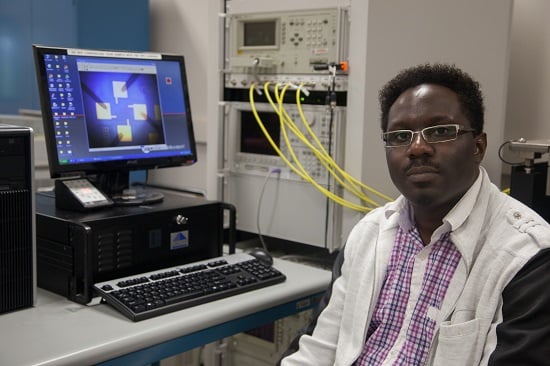
Deji Akinwande, a Nigerian professor who was recently named by President Barack Obama for US government highest research award, says he is always a Nigerian.
In an interview with TheCable, Akinwande said he is very interested in Nigeria, and is currently seeking research collaboration with some Nigerian universities.
Akinwande, who grew up in Opebi Allen area of Lagos state and left Nigeria as a teenager in 1994, said his invention is aimed at building more energy efficient electronic chips to make mobile phones last a week or two without charging.
Akinwande speaks about his childhood, the United States and Nobel Prize in physics.
Your story is a compelling story of a Nigerian, doing great things beyond the shores of his father land. Can you tell us what about your younger years  your schooling from primary education till you left Nigeria and life at Opebi-Allen in contrast with life in the US.
I grew up in Ikeja and my dad was an accountant at one of the major newspapers and my mom was a government employee at the ministry of education. I went to grace children school (perhaps in Gbagada) and did well, I was a good student. After that I went to FGC (Federal government college) Idoani, where I became very interested in engineering. I would say I was above average, but there were many students that were more outstanding.
I studied hard and enjoyed the dorm life as I rose to SSS3. I did the normal things we all did then; Woke up early to go to the dam to get water to bath, had coal irons to iron our uniform, manual labour to cut the grass, did errands for seniors, was active in the school church fellowship. Importantly we had very good teachers so I learned a lot. During the school break, I enjoyed walking around Allen avenue with my friends who lived in the area, played video games, went to country club, window shopping…normal stuff for kids back then.
In the US, it is very different, things are more formal, you schedule appointments to meet friends and associates. It is much harder to have lasting relations because people move around quite a bit and the country is very large. Nevertheless, it is a wonderful place to pursue your own ideas and forge your own destiny.
Let’s have an insight into your family background: parents, siblings and how the love for physics came to be.
Love of physics and engineering was organic for me. My dad was accountant and mom was a chef, but I have always been more interested in science and engineering from an early age. Perhaps drawn by great questions such as the origin of life or the universe. Several of my uncles also went to get a PhD in electrical engineering, notably my uncle Tayo Akinwande at MIT (Massachusetts Institute of Technology). My brothers are all in accounting after my dad. I find engineering to be a wonderful discipline to bring ideas to life and to make things, which is of course very rewarding.
Many Nigerians will like to associate themselves with your unique feat, but they may think of you as an alien who got opportunities they cannot get. What would you say to that class of Nigerians?
I believe without a doubt that fellow Nigerians in my position will probably do just as well or better. Like I mentioned I was just above average at secondary school, many of my peers there will certainly have done well in the US and are doing well even in Nigeria. The most important thing is hard work and some good fortune once in a while. When I was 17 and roaming the streets of Opebi, sometimes I used to read some of the stories of fellow Nigerians that were doing well abroad, of course it was completely foreign and out of reach for me. God gave me an opportunity and I have been fortunate to make the most out of it.
You’ve spent so many years abroad, do you still feel Nigerian? Would it be inaccurate for Nigerians to see you as one of their own blazing the trail in international circles?
Once a Nigerian you are always a Nigerian. No Nigerian can forget this in America. I am proud of this and several times a month I am asked where I am from. I find that most Americans are very curious to know more about Nigeria and many have heard about the Super Eagles.
Your invention makes sense to me someone with a fair science background. But many others do not know how significant this is for nanoscience and layman application. May you explain?
The basic idea is to make electronic chips more energy efficient so your mobile phone can last a week or two without charging. We have made significant progress in this direction that could impact the everyday life of everybody.

Do you have personal plans for technological developments in Nigeria?
I have a strong desire for development in Nigeria. As we speak I have been talking with several universities in Lagos and Ondo to establish a collaboration that will research a new technology for water purification and advanced nanomaterials for industry. We believe these ideas are immediately suitable to benefit Nigerian society using local capabilities and expertise.
What are your thoughts on the social, economic and political climate of the Nigerian system, with emphasis on President Buhari’s stay in office thus far?
I leave the politics to the politicians. I must say that Nigeria has a great amount of human potential and together we can address common challenges.
I understand your work on Silicene was the most cited work in Nanoscience for 2015. Do you have dreams of winning a Nobel prize for physics in the nearest future?
While we are honoured to receive recognition, our main passion is researching novel ideas to find new discoveries that will benefit society. In this regard, awards are not the essence of our pursuit but simply icing on the cake.
What are your thoughts on Nigerian education: schools, teachers, salaries?
I am not familiar with the current details. However, these issues are not unique to Nigeria, the exact same questions are asked continually in the US.
credit the cable

Thursday, 18 February 2016

Radioactive material missing in Iraq: Who has it?

Highly-radioactive material missing in Iraq

    Highly-radioactive material missing in Iraq, material went missing from site in southern Iraq in November

  • The details are just coming to light now
  • The radioisotope Ir-192 was being used in a device to test oil pipes
 Iraqi and international officials said Thursday that radioactive material was stolen from a contractor working for an oil services company in Basra Province back in November.
The missing material was reported to the International Atomic Energy Agency in November, but the investigation continues into its whereabouts.
The potentially deadly material was in the care of at least two companies, who are passing blame around, while the IAEA said that Iraq has not asked for help from the international body with nuclear expertise.
Details of the missing material was first reported by Reuters.
The theft has raised fears that if the material falls into the hands of ISIS or other terror groups, it has potential to harm many.

What was stolen?


The missing item is an industrial radiography device -- basically, a tool that uses a radioactive isotope to beam gamma radiation. In this case, the beam of radiation was being used to test oil pipelines for structural problems such as weakening welds.
The device uses Iridium-192, which in additional to industrial uses, is sometimes used for radiotherapy.
According to the IAEA, the missing Ir-192 was in a shielding container. According to Reuters, the shielding container is about the size of a laptop.

Whose equipment was this?


The company SGS Turkey was contracted by oil services company Weatherford to perform the tests of the pipes at an oil field in Basra using the tool. The company said the device it used is equipped with a "low-level radioactive source."
According to SGS, the equipment is kept in a secured bunker that is provided by Weatherford. The radioactive material was in the bunker when it went missing, and it is Weatherford's responsibility to secure it, SGS said in a statement. SGS said it assumes no responsibility.
Weatherford, for its part, argues the opposite. The company said in a statement that "Weatherford holds no responsibility or liability in relation to this matter."

How dangerous is the stolen material?


It's all relative, said Kevin Kamps, a radioactive waste specialist at Beyond Nuclear, an anti-nuclear advocacy group.
The half-life of Ir-192 is about 74 days -- so in the nearly four months since it went missing, it has decayed by half.
But the risk for health hazard stretches much longer -- at least 10 half-lives or as many as 20 half-lives.
The gamma rays emitted by the Ir-192 can deliver fatal doses of radiation at close range, Kamps said.
The fear of terrorists possessing the material is that it could be used to contaminate a water supply or detonate in a "dirty bomb" in an urban area, he said.
"It is shocking just how little radioactive material can do so much damage," Kamps said.
Ir-192 also releases beta rays, which can damage human skin or internal organs if ingested, he said.
If the protective shield is removed, it could be very dangerous, he said.
However, Andrew Bieniawski with the Nuclear Threat Initiative said that "while we are generally concerned about terrorists trying to acquire radioactive material, Ir-192 is not the isotope of greatest concern."
This material is in a metallic form, not a powder, which would disperse more widely if detonated by an explosive, according to Bieniawski.

What is being done?


Murtadha Kareem Khazael, a member of the Basra Provincial Council, told CNN local officials are investigating as well. Basra's governor formed a committee to look at the case to look at this "serious claim," he said.
The committee's report is due this weekend, said Khazael, adding that "based on it, we will take important decisions."
The IAEA said it offered Iraqi officials assistance, but that Iraq has not taken it up on its offer.
"No assistance has been requested so far through the Incident and Emergency Centre (IEC), the IAEA's contact point," the international body said in a statement.
While the provincial government confirmed the theft, a spokesman for the country's Ministry of Environment said his office lacked information on the incident. Spokesman Ameer Al -Hassun said the ministry cannot deny or confirm the theft until more information is available.
credit cnn.com

Wednesday, 17 February 2016

Neanderthals and humans interbred '100,000 years ago'

Neanderthal recreationImage copyright ELISABETH DAYNES/SCIENCE PHOTO LIBRARY
Image caption Neanderthals may have been breeding with modern humans much earlier was thought
Neanderthals and modern humans were interbreeding much earlier than was previously thought, scientists say.
Traces of human DNA found in a Neanderthal genome suggest that we started mixing with our now-extinct relatives 100,000 years ago.
Previously it had been thought that the two species first encountered each other when modern humans left Africa, about 60,000 years ago.
The research is published in the journal Nature.
Dr Sergi Castellano, from the Max Planck Institute for Evolutionary Anthropology, in Germany, said: "It is significant for understanding the history of modern humans and Neanderthals."
Cave excavationImage copyright BENCE VIOLA
Image caption The Neanderthal remains were found in a cave in Siberia
The ancient remains of a female Neanderthal, found in a remote cave in the Altai Mountains in Siberia, are the source of these revelations about the sex lives of our ancestors.
A genetic analysis reveals that portions of human DNA lie within her genome, revealing an interspecies mingling that took place 100,000 years ago.
Earlier research suggested that humans started interbreeding with our heavy-browed, stocky relatives when they migrated out of Africa and began to spread around the world.
As they left the continent, they met - and mingled with - the Neanderthals, who lived across Europe and Asia.
Neanderthal genes from these encounters are found in humans today, and recent studies have shown that these portions of DNA play an integral role in everything from our immune system to our propensity to diseases.
But the latest finding of a flow of genes in the opposite direction, from humans to Neanderthals, suggests such mating was happening thousands of years earlier.
It is not yet clear what impact these genes had on Neanderthals.
"The functional significance of this is unclear at the moment," said Dr Castellano.
Neanderthal skullImage copyright Science Photo Library
Image caption Neanderthal genes in the humans are found in many Europeans and Asian populations
However, the findings do shed more light on the history of human migration.
If early humans were having sex with Neanderthals 100,000 years ago, then they must have been doing so outside of Africa because our close relatives were not found there.
And this means that they had left Africa before the larger dispersal that took place at least 40,000 years later.
This adds to the idea that early forays out of the continent took place. Other recent evidence includes early human fossils found in Skhul and Qafzeh in Israel, and recent research that suggests people were living in China at least 80,000 years ago.
Commenting on the study Prof Chris Stringer, research leader in human origins, from the Natural History Museum in London, said: "I think that anywhere in southern Asia could theoretically have been the location of this early interbreeding, since we really don't know how widespread Neanderthals and early modern humans might have been in the regions between Arabia and China at this time."
He added: "At the moment we simply don't know how these matings happened and the possibilities range from relatively peaceful exchanges of partners, to one group raiding another and stealing females (which happens in chimps and some modern hunter-gatherers), through to adopting abandoned or orphaned babies.
"Eventually, geneticists should be able to show if the transfer of DNA in either direction was mainly via males, females, or about equal in proportion, but it will need a lot more data before that becomes possible."
credit bbc.co.uk

Friday, 12 February 2016

Gravitational waves detected -- and that's creating waves in science

Einstein was right.
Just over 100 years after he published his general theory of relativity, scientists have found what Albert Einstein predicted as part of the theory: gravitational waves.
"We have detected gravitational waves. We did it," said David Reitze, executive director of LIGO, the Laser Interferometer Gravitational-Wave Observatory, which was created to do just what Reitze announced.
Reitze made the announcement Thursday at the National Press Club in Washington surrounded by other LIGO researchers and National Science Foundation head France Cordova.
The gravitational waves -- ripples in space-time -- were created by the merging of two black holes, Reitze said. One black hole had the mass of 29 suns; the other was the equivalent of 36 suns. Each was perhaps 50 kilometers (30 miles) in diameter.
More than a billion years ago -- LIGO estimates about 1.3 billion -- the two collided at half the speed of light. Gravitational waves pass through everything, so the result traveled through the universe for that time before reaching Earth.

The 'chirp' of black holes colliding


The gravitational waves stretched and compressed space around Earth "like Jell-O," said Reitze.
However, the waves are so small that it takes a detector like LIGO, capable of measuring distortions one-thousandth the size of a proton, to observe them. They were observed on September 14, 2015.
Scientists heard the sound of the black holes colliding as a "chirp" lasting one-fifth of a second. Though gravitational waves aren't sound waves, the increase in frequency the collision exhibited in its last milliseconds -- when the black holes were mere kilometers apart and growing closer -- is a frequency we can hear, said Deirdre Shoemaker, a Georgia Tech physicist who works on LIGO.
LIGO is described as "a system of two identical detectors" -- one located in Livingston, Louisiana, the other in Hanford, Washington -- "carefully constructed to detect incredibly tiny vibrations from passing gravitational waves." The project was created by scientists from Caltech and MIT and funded by the National Science Foundation.
Szabolcs Marka, a physicist at Columbia University who is leader of the LIGO member Columbia Experimental Gravity Group, said you could think of it as "a cosmic microphone."

Einstein's concepts


Gravitational waves were predicted by Einstein in his general theory of relativity in 1915, the theory that proposed space-time as a concept. The waves are a distortion of space-time.
However, in order for us to detect them, they needed to be created by a mammoth event -- for example, the collision of two black holes.
Black holes are a holy grail of the gravitational wave concept. To date, we'd been able only to see their aftereffects. Black holes themselves were a conjecture.
"There's been a lot of indirect evidence for their existence," says Shoemaker, an expert in black holes. "But this is the first time we actually detect two black holes merging and we know the only thing that predicts that (is) gravitational radiation, (which) comes from a binary black hole merging. There's no other way we could have seen that but gravitationally."

'Now we can listen to the universe'


But is LIGO correct? Have we really detected gravitational waves?
Scientists have what they call a "five-sigma" standard of proof, and LIGO's researchers say the gravitational wave discovery exceeds that.
"It took six months of convincing ourselves that it was correct," says Shoemaker. "It goes beyond that five-sigma to proving that nothing was happening with the equipment that couldn't be understood."
She's thrilled with the possibilities.
"Imagine having never been able to hear before and all you can do is see," she says. "Now we can listen to the universe where we were deaf before. It's a different spectrum (from the electromagnetic spectrum). It's unlike anything we've ever detected before."
"What's really exciting is what comes next," said Reitze at the announcement. "I think we're opening a window on the universe -- a window of gravitational wave astronomy."

Einstein would be surprised


Columbia University physicist Marka, who's been working on the project for more than a decade, said the discovery will open up new horizons, including direct tests of Einstein's general theory. Those could further support it -- or force physicists to come up with new ideas.
"A physicist is always looking for a flaw in a theory. And the only way to find a flaw is to test it," Marka told CNN. "Einstein's theory did not present any flaws to us yet, and that is really scary. Physicists are very (skeptical) of flawless theories because then we have nothing to do."
Ironically, Einstein didn't think gravitational waves would be discovered.
"He thought gravitational waves are a beautiful construct, but they are so small nobody would ever be able to actually measure it," said Marka.
credit cnn.com

Monday, 8 February 2016

World's largest concentrated solar plant switches on in the Sahara

 Morocco has switched on what will be the world's largest concentrated solar power plant.
The new site near the city of Ouarzazate -- famous as a filming location for Hollywood blockbusters like "Lawrence of Arabia" and "Gladiator" -- could produce enough energy to power over one million homes by 2018 and reduce carbon emissions by an estimated 760,000 tons per year, according to the Climate Investment Funds (CIF) finance group.
As His Majesty Mohammed VI of Morocco pressed a button on 4 February 2016, the first phase of the three-part project was set in motion.

Harnessing the power of salt


The solar plant, called the Noor complex, uses concentrating solar power (CSP) which is more expensive to install than the widely used photovoltaic panels, but unlike them, enables the storage of energy for nights and cloudy days.
    Mirrors focus the sun's light and heat up a liquid, which, when mixed with water, reaches around 400 degree Celsius. The steam produced from this process drives a turbine and generates electrical power.
    A cylinder full of salt is melted by the warmth from the mirrors during the day, and stays hot enough at night to provide up to eight hours of power, according to World Bank, who partially financed construction of the plant through a $97 million loan from the Clean Technology Fund.
    "With this bold step toward a clean energy future, Morocco is pioneering a greener development and developing a cutting edge solar technology," said Marie Francoise Marie-Nelly, World Bank Country Director for the Maghreb.
    "The returns on this investment will be significant for the country and its people, by enhancing energy security, creating a cleaner environment, and encouraging new industries and job creation."

    Setting an example


    Imported fossil fuels currently provide for 97% of Morocco's energy need, the World Bank says . As a result the country is keen to diversify and start using renewable energy.
    This goal was one of the reasons that Morocco was chosen to host the next United Nations climate change conference (COP 22) in November 2016, according to the CIF.
    An aerial view of the solar mirrors at the Noor 1 concentrated solar power plant
    "Africa, in general, and North Africa in particular, have tremendous potential for solar generation that remain largely untapped," Sameh Mobarek, Senior Counsel and World Bank's project manager told CNN.
    "Morocco's leadership in this area may provide the model for other countries to follow in pursuing development of their energy sectors in a sustainable manner."

    Lasting impact


    As well as lowering carbon emissions and dependence on fossil fuels, this plant is expected to increase the share of renewable energy in total electricity generation from 13% to 42%, according to CIF.
    It is also hoped that the project will positively impact the surrounding area. Approximately 583,000 people live in Ouarzazate town 10km (6.2 miles) from the site.
    The poverty rate there is 23% but the hope is that the cleaner energy and better supply will reduce the occurrence of flickering lightbulbs and malfunctioning hospital equipment.
    credit cnn.com

    Tuesday, 2 February 2016

    Floyd Mayweather offered 'crazy numbers' but denies comeback

    Floyd Mayweather says he has had "crazy numbers" thrown at him to fight again.
    But despite offers of "nine-figure" sums of money, Mayweather, who retired after his 49th successive victory last September, is not planning a comeback.
    "As of right now, I am out completely," said the 38-year-old multiple world champion.
    "If I do get the itch to come back, it really won't be for the money but I have to get paid. That's why the nickname is Floyd 'Money' Mayweather."
    American Mayweather won world titles at five weights and retired with an unblemished record.
    Currently visiting eight cities in the United Kingdom as part of a speaking tour, he spoke to BBC World Service Sport about his current activities.

    On fighting Pacquiao again                   

    Mayweather beat Manny Pacquiao in the most lucrative fight in history in his penultimate bout last May and has ruled out the possibility of a rematch. That's despite Michael Koncz, Pacquiao's business adviser, claiming contact had been made with Mayweather Promotions about the possibility of another fight.
    "Everything that you guys are hearing that Michael Koncz has said and what [promoter] Bob Arum has said is totally false. Totally false. I haven't spoken to Bob Arum, I haven't spoken to Michael Koncz.
    "And as far as people keep talking about Mayweather Promotions, I dictate and control what goes on with it. Leonard Ellerbe is the CEO but everything has to go through me and I have to put the green light on any and everything."

    On James DeGaleJames DeGale                    

    James DeGale won Olympic gold at the 2008 Beijing Games
    Mayweather promotes WBC super-middleweight champion Badou Jack and wants him to have a unification fight with Britain's IBF champion James DeGale.
    "James DeGale is a very, very good fighter and he is solid. I like him. A lot of personality. The ultimate goal is for him and Badou to fight in a unification bout. Do I think that can happen? Absolutely.
    "He talked to me the other day when I was in Los Angeles at the fights. He said he would like to fight Badou Jack. But everything takes time. Eventually it will happen.
    "If he continues to win and Badou continues to win, which I truly believe both will, the ultimate goal is to match those two in a super bout, down the line."

    On being the world's best boxer

    "I really wouldn't want to say the best pound-for-pound fighter in the world. You know, I am no longer active. I would like to say the best ever (TBE).
    "It's not being cocky or arrogant, it's just the proof is in the pudding. I think I have earned the right to call myself TBE. And I have lived up to the name TBE by going out there, day in, day out, when I was active and winning.
    "Have I have ever took a loss before? Yes. In life. You lose a loved one, that's taking a loss. When your children hurt, that's a loss. When you are sick, that's a loss. But I got to where I got to from a lot of hard work, a very strong team, a smart team that stood behind me."

    On meeting Ricky HattonFloyd Mayweather fighting against Ricky Hatton                    

    Floyd Mayweather stopped Ricky Hatton in the 10th round of their 2007 fight in Las Vegas
    Mayweather beat British world champion Ricky Hatton in a world welterweight title fight in December 2007 and will meet up with the Manchester fighter again in Bolton as part of his tour.
    "Ricky Hatton was a legendary fighter, a lot of heart, great guy, great person. But in the sport of boxing, a very competitive sport, the best have to fight the best. When Floyd Mayweather faced Ricky Hatton, he was at the top and I was also at the top. He has a great family. Great mother, great father. He is a good guy. But things happen."

    On retirement

    "Life is great. My family has a comfortable life from me going out there and taking chances and taking risks. That was the ultimate goal. My kids will be going to college real soon.
    "I am very happy that I was able to be a risk-taker. Roll the dice and take chances. Me being in the 12th grade, leaving school, leaving everything behind, leaving my family behind to go out there and do something that I love to do. It paid off in the long run."
    Credit Bbc.co.uk

    Monday, 25 January 2016

    British explorer Henry Worsley dies crossing Antarctic, 30 miles short of goal

    British explorer Henry Worsley dies crossing Antarctic, 30 miles short of goal


    Story highlights

    • British explorer Henry Worsley dies in solo South Pole mission
    • Friend Prince William pays tribute to explorer who raised thousands for charity
    (CNN)British explorer Henry Worsley has died attempting to be the first person to cross the Antarctic unaided, in an epic charity mission inspired by Ernest Shackleton.
    The 55-year-old former British Army officer died after being airlifted to a hospital in Punta Arenas, Chile, suffering severe exhaustion and dehydration.
    The father-of-two was found to have bacterial peritonitis (a bacterial infection in the abdomen), after having trekked around 913 miles unaided across the South Pole -- just 30 miles short of his end goal.
    Worsley was 71 days into his record-breaking solo mission to complete legendary British explorer Ernest Shackleton's unsuccessful crossing of Antarctica a century ago.
    But Worsley was forced to call for help on Friday amid blizzard conditions, and in poor health he was airlifted to hospital.
    Worsley's last statement sent from Antarctica said: "The 71 days alone on the Antarctic with over 900 statute miles covered and a gradual grinding down of my physical endurance finally took its toll today, and it is with sadness that I report it is journey's end -- so close to my goal."
    Prince William, a friend of Worsley and a patron of the Shackleton Solo Expedition, said he and his brother Prince Harry were saddened by the news. "He was a man who showed great courage and determination," he said. "We are incredibly proud to be associated with him.
    "Even after retiring from the Army, Henry continued to show selfless commitment to his fellow servicemen and women, by undertaking this extraordinary Shackleton solo expedition on their behalf."
    Worsley's wife Joanna said: 'It is with heartbroken sadness I let you know that my husband Henry Worsley has died following complete organ failure; despite all efforts of ALE [Worsley's expedition team] and medical staff at the Clinica Magallanes in Punta Arenas, Chile.
    "Henry achieved his Shackleton Solo goals: of raising over £100,000 ($142,000) for the Endeavour Fund, to help his wounded colleagues, and so nearly completing the first unsupported crossing of the Antarctic landmass. A crossing made, under exceptionally difficult weather conditions, to mark the 100th anniversary of Sir Ernest Shackleton's Endurance expedition -- his lifelong hero."Source CNN.Com

    Tuesday, 19 January 2016

    Prof Stephen Hawking Has More Bad News For Humanity: We Are AboutTo Wipe Ourselves Out.
    Prof Stephen Hawking
     
    Cheery physicist Professor Stephen Hawking says that mankind could be wiped out by our own creations within the next 100 years. 
    Answering audience questions at this year’s BBC Reith Lectures, he said that our rush to understand and improve life through science and technology could be humanity’s undoing.
    He has previously suggested that colonising other planets will be the only way that the human race can survive, but he warns that we may lose Earth to some kind of major disaster before we have a chance to properly do so. 
    “Although the chance of a disaster to planet Earth in a given year may be quite low,” he explained, “it adds up over time, and becomes a near certainty in the next thousand or ten thousand years.
    "By that time we should have spread out into space, and to other stars, so a disaster on Earth would not mean the end of the human race.
    "However, we will not establish self-sustaining colonies in space for at least the next hundred years, so we have to be very careful in this period.”
    It’s not the first time the professor has mongered doom; he has previously warned that AI robots will wipe us out unless we ban them first and that hostile aliens are about to destroy us
    This latest warning comes with the footnote that further research into science and technology will provide “new ways things can go wrong”. 
    “It’s important to ensure that these changes are heading in the right directions,” he added. 
    “In a democratic society, this means that everyone needs to have a basic understanding of science to make informed decisions about the future.
    "So communicate plainly what you are trying to do in science, and who knows, you might even end up understanding it yourself.
    “We are not going to stop making progress, or reverse it, so we must recognise the dangers and control them.” 

    Source yahoo.com


    Monday, 30 November 2015

    Smog chokes Chinese, Indian capitals as climate talks begin


    Smog in New Delhi


    The capitals of the world's two most populous nations, China and India, were blanketed in hazardous, choking smog on Monday as climate change talks began in Paris, where leaders of both countries are among the participants.

    China's capital Beijing maintained an "orange" pollution alert, the second-highest level, on Monday, closing highways, halting or suspending construction and prompting a warning to residents to stay indoors.

    The choking pollution was caused by the "unfavourable" weather, the Ministry of Environmental Protection said on Sunday. Emissions in northern China soar over winter as urban heating systems are switched on and low wind speeds have meant that polluted air has not been dispersed.

    In New Delhi, the U.S. embassy's monitoring station recorded an air quality index of 372, which puts air pollution levels well into "hazardous" territory. A thick smog blanketed the city and visibility was down to about 200 yards (metres).

    Air quality in the city of 16 million is usually bad in winter, when coal fires are lit by the poor to ward off the cold. Traffic fumes, too, are trapped over the city by a temperature inversion and the lack of wind.

    However, the government has not raised any alarm over the current air quality and no advisories have been issued to the public. Thirty thousand runners took part in a half marathon at the weekend, when pollution levels were just as high.

    In Beijing, a city of 22.5 million, the air quality index in some parts of the city soared to 500, its highest possible level. At levels higher than 300, residents are encouraged to remain indoors, according to government guidelines.

    The hazardous air underscores the challenge facing the government as it battles pollution caused by the coal-burning power industry and will raise questions about its ability to clean up its economy at the talks in Paris.

    Chinese President Xi Jinping and Indian Prime Minister Narendra Modi are both in Paris and both were scheduled to meet U.S. President Barack Obama on Monday to give momentum to the two-week negotiations.

    "WHEN A CHILD IS BORN, WE PLANT A TREE"

    Modi sought to highlight India's green credentials in an article for the Financial Times on Monday, writing: "The instinct of our culture is to take a sustainable path to development. When a child is born, we plant a tree."

    But at Connaught Place, a city centre landmark in New Delhi, people chided the government for failing to minimise the risks to their health from air pollution.


    Beijing chokes on smog as Paris talks begin
    "The pollution level is so high it's just unbelievable," said Aisha, a 19-year-old student.

    For Beijing's residents, the poor air makes breathing hard.

    "This sort of weather, you can see that all of Beijing has been completely enveloped in smog...and for every breath, getting up every morning, your throat will feel particularly uncomfortable," said Zhang Heng, a 26-year-old architect.

    The Beijing Environmental Protection Bureau said on Sunday that it had requested factories to limit or suspend output and had also stopped construction work throughout the city.

    The ministry said the number of cities affected by heavy pollution had reached 23, stretching across 530,000 square km, an area the size of Spain, but a cold front beginning on Wednesday would see the situation improve.

    State-run Xinhua news agency said more than 200 expressway toll gates in east China's Shandong province were closed on Monday due to smog. The province issued a yellow alert.

    China launched a "war on pollution" last year following a spate of smog outbreaks in Beijing and surrounding regions.

    China has vowed to slash coal consumption and close down polluting industrial capacity, but environmental officials admit that the country is unlikely to meet state air quality standards until at least 2030.

    Reducing coal use and promoting cleaner forms of energy are set to play a crucial role in China's pledges to bring its climate warming greenhouse gas emissions to a peak by around 2030.

    (Reporting by David Stanway, Kathy Chen and Adam Rose in Beijing, and; Douglas Busvine and Alex Richardson in New Delhi; Editing by Josephine Mason and Raju Gopalakrishnan)

    Culled from Reuters.com

    Persian Gulf heat: It may become too hot for humans to survive, study warns

    (CNN)We frequently hear of the future dangers that human-caused climate change could bring, but few paint as bleak a picture as the one laid in a new study released this week.

    The study by authors from Loyola Marymount University and the Massachusetts Institute of Technology offers a harsh assessment: Climate change could leave major cities in a key part of the Middle East, the oil-rich Persian Gulf region, unfit for humans to survive.
    They'd literally be unlivable.

    And not because far off glaciers are melting and raising the sea level or because storms are becoming stronger or more frequent. They'd be unlivable simply because it is becoming too dang hot during the summer.

    Two Degrees: Have a climate change question? Ask it here
    It makes sense that as global temperatures continue to rise as a result of greenhouse gas emissions by humans (and creep ever closer to the all-important 2 degree Celsius of warming), areas such as the Persian Gulf, which already experience some of the most extreme temperatures on Earth, would be the first to reach a level where humans can no longer survive.

    That leaves a region that relies so heavily on the extraction of fossil fuels for its economic prosperity potentially rendered uninhabitable because of their use.

    Sweating it out -- or not
    "It's not the heat, it's the humidity."

    We've all heard this statement, and as a Georgia resident, I can attest to its truthfulness. It's especially valid when it comes to the human body's ability to deal with heat stress.
    Our bodies react to heat by producing sweat, which then evaporates and cools our skin by a process known as evaporative cooling. But as the temperature and moisture in the air increase, that process becomes less and less effective. It can reach a point where a body can no longer cool off.

    The study looked at "wet-bulb temperature," which is a value that combines air temperature and humidity. Wet-bulb temperature is always less than the actual air temperature, unless the air is 100% saturated, with drier air having a lower wet-bulb temperature compared with the air temperature.


    Persian Gulf

    © Mapbox © OpenStreetMap Improve this map

    The scientists in the study ran computer models to see how this value changed over time with increasing greenhouse gas concentrations.
    Since they looked only at the Persian Gulf, the model was able to capture some of the finer-scale geography that makes up the Middle East -- where extremely hot and dry deserts meet very humid and more temperate Gulf coastlines.
    This allowed the scientists the ability to see how summertime conditions in individual cities, such as Dubai and Abu Dhabi, will change by 2100.
    2015 might have seen hottest summer in 4,000 years
    A grim prediction for 2100, but also hope

    2015's record-setting summer heat 01:09

    In present-day conditions, the wet-bulb temperature only exceeds 31°C (88°F) on the most extreme days of summer and never gets to 35°C (95°F), a value that is considered to be lethal, even for the fittest of humans. By 2100, however, many regions along the Persian Gulf, such as Dubai, will see this value reach 31°C on an average summer day and the most extreme days could exceed the lethal value of 35°C.
    In drier locations such as Kuwait City, the actual air temperature is projected to top an astonishing 60°C (140°F), though the dry air will keep the wet-bulb temperature within survivable limits (hey, it's a dry heat!).

    All is not doom and gloom in the study, however.
    The same model was run using a "mitigation scenario" laid out in the recent Intergovernmental Panel on Climate Change's report in 2013, which include significant cutbacks in future carbon emissions. Under this scenario the temperatures, while still hotter than present day, never reach deadly levels by 2100.

    Which scenario plays out could be largely determined in December, when world leaders meet in Paris for COP21 to try to reach an agreement to curb fossil-fuel emissions, and potentially allow human civilization to continue in the region where it first began.
    Will hacking nature protect us from climate change?

    Culled from CNN.com