The Kurdish militant group TAK says it carried out Sunday's deadly attack in the Turkish capital, Ankara.
In an online statement it said the attack, which killed 37 people, was in revenge for military operations in the mainly Kurdish south-east.The TAK, an offshoot of the banned Kurdistan Workers' Party (PKK), had already said it was behind another bombing in Ankara last month.
Authorities in Turkey have blamed the latest attack on the PKK.
In a further development, Germany closed its embassy in Ankara and its consulate and a school in Istanbul on Thursday citing a "concrete threat" of an imminent attack.
Twelve German tourists were killed in a suicide bombing blamed on the so-called Islamic State (IS) group in Istanbul in January.
Sunday's suicide car bombing took place in a busy commercial district and transport hub in the centre of Ankara. Dozens of people were wounded.

Analysis
After a bombing in 2011, TAK went quiet for a few years but has now reared its head with an attack at Istanbul's Sabiha Gokcen airport in December and the two suicide bombings in Ankara.The reason is clearly the resumption of armed conflict between the Turkish state and Kurdish militants in the south-east.
Since a ceasefire between the two sides collapsed last July, hundreds have been killed and predominantly Kurdish cities are under repeated curfews.
Just as the PKK has resumed attacks on military and police targets largely in the south-east, TAK has stepped up its bombings in other parts of the country, targeting the capital to show it can hit the very heart of the Turkish state, revelling in exposing apparent security lapses.
On Wednesday, the group said on its website (in Kurdish) that Sunday's bombing had been aimed at security forces and had not been intended to kill civilians.
However, it warned that further civilian casualties in its attacks were inevitable.
"On the evening of March 13, a suicide attack was carried out... in the streets of the capital of the fascist Turkish republic. We claim this attack," the group said.
Earlier this week, Turkey named one of the bombers as Seher Cagla Demir, saying she was a member of the PKK and had been trained by the Kurdish YPG militia, based in Syria.
The Turkish government considers the YPG a terrorist group, but its allies, including the US, support the YPG in its fight against IS.
Turkey said that a second suicide bomber was male, but had not yet been identified. However, the TAK made no mention of a second bomber.
Profile: Seher Cagla Demir
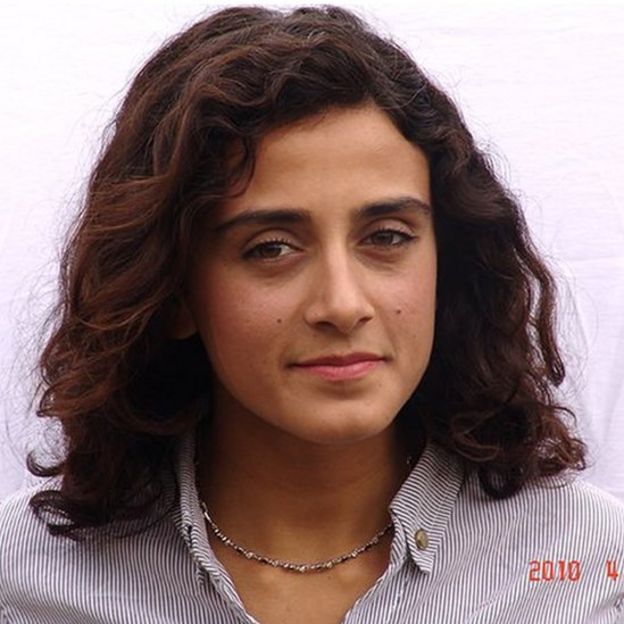 copyright TAK
 In a statement (in Turkish) the ministry said she had joined the PKK in 2013 and had received training from the People's Protection Units (YPG) in Syria.
The TAK has released a statement on its website naming Seher Cagla Demir, alias Doga Jiyan, as the suicide bomber behind the 13 March attack.
Pro-secular Turkish newspaper Sozcu reported that Demir was studying at Balikesir University. She was already on trial, along with four others, for membership of the PKK, the paper reports.

Turkey responded to Sunday's attack by launching air strikes on Kurdish targets in northern Iraq. It said 11 people had been detained in connection with the blast.
A two-year-old ceasefire between Turkey and the PKK broke down last summer.
Since then, more than 340 members of Turkey's security forces have been killed along with at least 300 Kurdish fighters and more than 200 civilians.
Both the TAK and the PKK are classified as terrorist groups by Turkey and the US.
The TAK has previously said it carried out the suicide bombing on a military convoy in Ankara in February that killed 28 people.
credit bbc.co.uk

No comments:
Post a Comment